 The Women’s Institute for Freedom of the Press
Say Her Name
Black women have experienced violence to a heartbreaking degree since they were brought to these shores. Police, in particular, continue to get away with violence and outright murder to this day. Much of the time the coverage of police killings by media is distorted or they simply give little or no coverage.
There is a movement to change this: expose the injustices, hold those accountable, and confront the systemic racism and patriarchy that perpetuates the murder of black women. Kimberlé Crenshaw, Co-founder and Executive Director of African American Policy Forum (AAPF), Professor of Law, Columbia and UCLA, has spearheaded this movement with the hashtag #Say Her Name. If you haven’t already explored the wonderful work they are doing, we urge you to do so. The information shared here is from the webinars and inspirational work they have been doing over the years.
Photos are from a moving vigil “Say Their Names” for Black Womxn, held June 21, 2020 on the Duke Ellington Bridge in Washington, DC., thanks to Freedom Fighters DC.
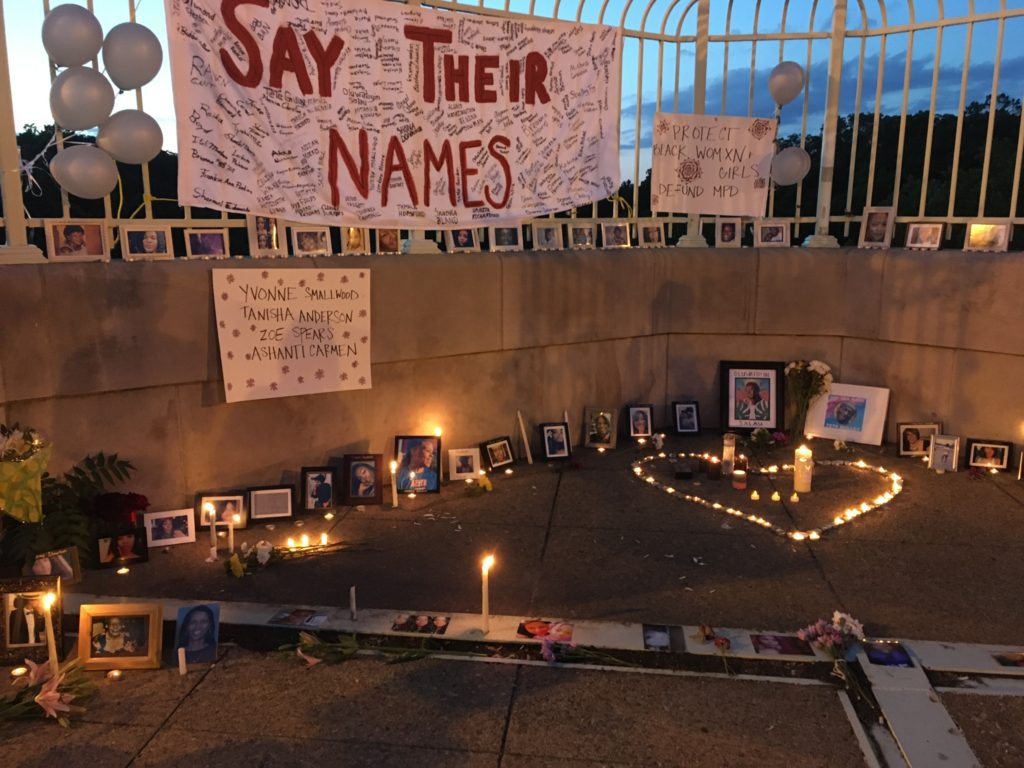
Below are the names of some of the black women who have been murdered by law enforcement. Almost none of the police officers have had to face any consequence for their actions. Almost all the women killed were unarmed. Some were experiencing mental health issues. Instead of being helped, they were shot.
The media reported police justifications for their shooting. In many cases, neither the women nor their families had a voice, particularly in the initial reports that were all that the public heard. The distorted narrative could not be corrected and media headlines often, perhaps inadvertently, summed up the lives of these women in distorted ways. For instance, a headline using the term “shoplifter” or even “suspected shoplifter” implies this somehow contributes to the justification for killing her. In one case, she was no threat, unarmed in her car with her child. To sum up her life in that manner not only affects all that read this narrative. It will affect her children who grow up to read about “why” their mother died. And it puts the blame on the woman rather than the killer, painful to the family. Not only do they lose a beloved mother, daughter, granddaughter, sister, aunt – they see the killer get away with the murder. The killer is almost always not charged at all. Nor do they lose their jobs and can go on to continue violent behavior.
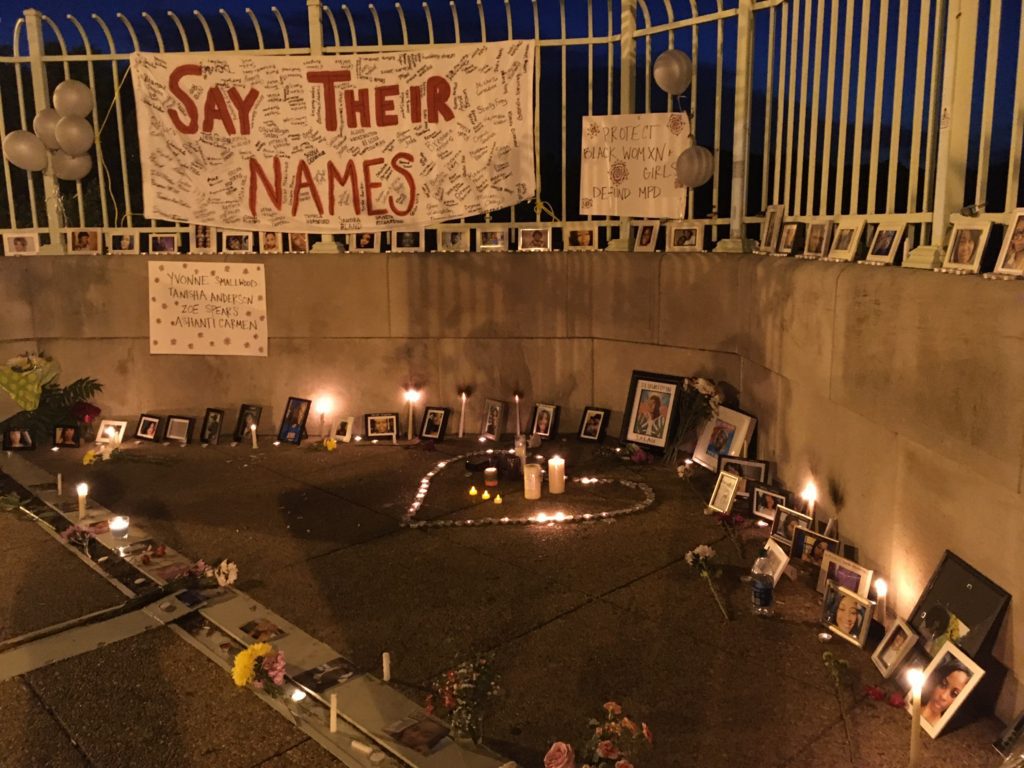
Fortunately a movement has grown to #SayHerName. More people speaking out on behalf of the murdered women. Sandra Bland’s murder in 2015 in particular brought attention to the experience of black women, as has Breonna Taylor’s this year.
We must hold the media reporting of the killings accountable when they simply report the police justifications for their killing. We must not let the media, in headlines or in their stories, lend credence to justifications by focusing on what the murdered black woman (or black man) are alleged to have done when those nonviolent actions alleged in no way can justify being shot. The narrative matters.
These are just some of the many black women shot by police and killed in police custody. When you learn about the lives of these women, their hopes and dreams cut short, see photos of them graduating school or with their children and families, it is even more heartbreaking and will inspire you to speak out. Their stories are not told in this article but you can hear about many of them from the AAPF and #SayHerName movement. You can also go to the media to search and will see much of the distortions. Killings caught on camera often show much of the injustice. Stopped for a traffic violation and ending up dead speaks for itself. In many cases ending up shot for not doing ANYTHING that can be construed as wrong, as in the Breonna Taylor case, still resulted in police not facing charges.
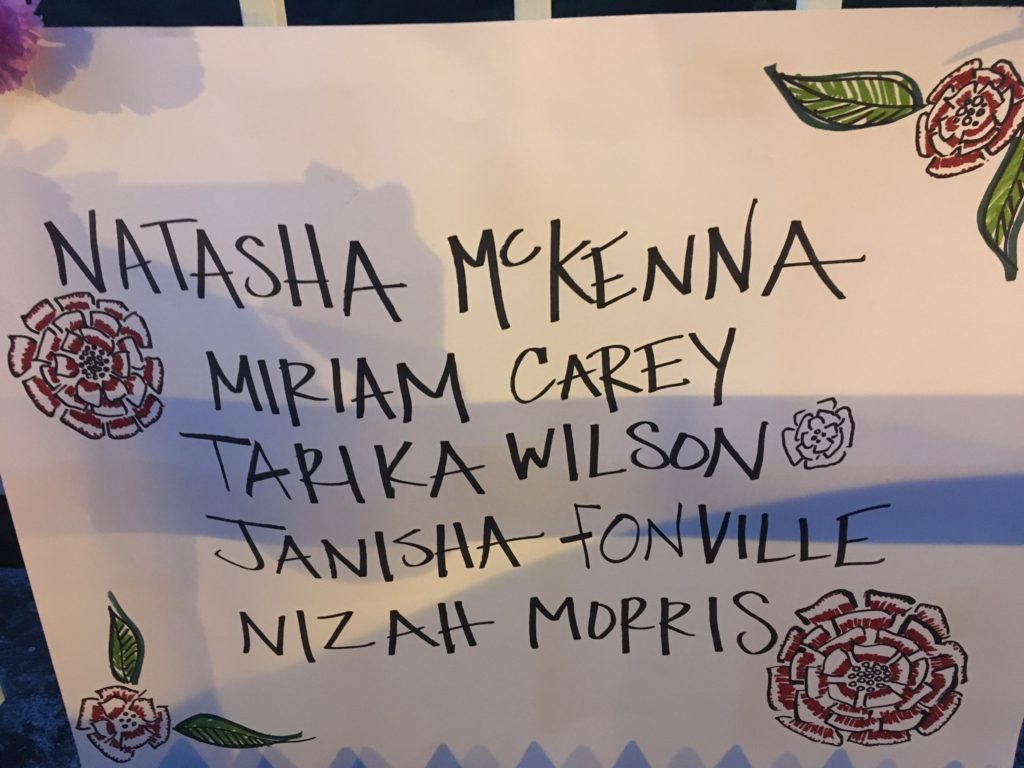
We at WIFP are motivated in our media democracy and media justice work in part because of all the violence against women over the decades, and the violence against black women and women of color is particularly horrendous. We are at an important moment when we can get closer to the justice we so desperately need.
Say Her Name (this list is just some of known black women killed)
2020
Breonna Taylor – 26 years old – Louisville, KY – March 13
2019
Pamela Shantay Turner – 44 years old – Baytown, TX – May 13
2017
Morgan London Rankins – 30 years old – Austin, TX – February 22
Charleena Lyles – 30 years old – Seattle, WA – June 18
2016
Bynnya McMillen – 16 years old – Elizabethtown, KY – January 11
Kisha Michael – 31 years old – Inglewood, CA – February 21
India Beaty – 25 years old – Norfolk, VA – March 19
Symone Marshall – 22 years old – Huntsville, TX – May 10
Jessica Williams – 29 years old – San Francisco, CA – May 19
Korryn Gaines – 23 years old – Baltimore, MD – August 1
2015
Natasha McKenna – 37 years old – Fairfax, VA – February 8
Janisha Fonville – 20 years old – Charlotte, NC – February 18, 2015
Meagan Hockaday – 26 years old – Oxnard, CA – March 28
Mya Hall – 27 years – Baltimore, MD – March 30
Alexia Christian – 26 years old – Atlanta, GA – April 30
Sandra Bland – 28 years – Waller County, TX – July 13
Joyce Curnell – 50 years old – Charleston, SC – July 22
Ralkina Jones – 37 years old – Cleveland, OH – July 26
India Kager – 27 years – Virginia Beach, VA – September 5
2014
Yvette Smith – 47 years old – Bastrop County, TX – February 16
Gabriella Nevarez – 22 years old – Sacramento, CA – March 2
Pearlie Golden – 93 years old – Hearne, TX – May 7
Michelle Cusseaux – 50 years old – Phoenix, AZ – August 13
Sheneque Proctor – 18 years old – Bessemer, AL – November 1
Aura Rosser – 40 years old – Ann Arbor, MI – November 9
Tanisha Anderson – 37 years old – Cleveland, OH – November 13
2013
Kayla Moore – 42 years old – Berkeley, CA – February 12
Kyam Livingston – 37 years old – Brooklyn, NY
Mirian Carey – 34 years old – Washington, DC
2012
Rekia Boyd – 22 years old – Chicago, IL – March 21
Shantel Davis – 23 years old – Brooklyn, NY – June 14
Shelly Frey – 27 years old – Houston, TX – December 6
2010
Ahjah Dixon – 23 years old – Corsica, TX – March 4
Aiyanna Stanley Jones – 7 years old – Detroit, MI – May 16
2008
Tarika Wilson – 26 years old – Lima, OH – January 4
2006
Kathryn Johnston – 92 years old – Atlanta, GA – November 21
2003
Kendra James – 21 years old – Portland, OR – May 5
Alberta Spruill – 57 years old – Harlem, NY – May 16
1984
Eleanor Bumpurs – 66 years old – Bronx, NY October 29

Progressive Media
Progressive Media: News & Perspectives Rarely Found in Corporate Media
Just five corporate conglomerates control over 90% of the media in the United States. They control the narratives in print, radio, publishing, film, and all forms of media. These corporate media normalize and promote war & imperialism, militarism, capitalism, the 2-party system, poverty, the control of the 1% that keep us from implementing democracy, animal factory farming, and all kinds of injustices. They do not seriously tackle and expose violence against women and people of color. Hiring more women and people of color in corporate media is necessary but cannot affect the change necessary to halt climate change, eradicate systemic racism and patriarchy, and end the injustices that are still so rampant. While we appreciate the voices that do get heard occasionally, we cannot expect those few voices to be sufficient when it is surrounded by misinformation, omissions, distortions, and normalizing narratives.
There are creative and outstanding voices providing the visions and information so lacking within the corporate media environment.
Here are just a few.
· Abby Martin (Host and Producer of Empire Files, Host of Media Roots Radio)
· Anya Parampil (Red Lines, The Greyzone)
· Medea Benjamin (Code Pink – books, articles, radio, and more!)
· Sonali Kolhatkar (Rising Up With Sonali)
· Amy Goodman (Democracy Now!)
· Laura Flanders (The Laura Flanders Show)
· Eleanor Goldfield (Act Out! and more)
· Ester Iverem (On The Ground – www.wpfwfm.org)
· Alina Duarte (independent global media reporter and photographer)
· Margaret Kimberley (Editor and Senior Columnist for Black Agenda Report)
· Margaret Flowers (Popular Resistance & Clearing the Fog)
· Hiba Yazbeck (Haaretz)
· Ann Wright (Code Pink)
· Films for Action (www.filmsforaction.org)
· The Greyzone (www.thegreyzone.com) with Max Blumenthal
· Council on Hemispheric Affairs (coha.org)
· Common Dreams (commondreams.org)
· MintPress News
· FAIR (Fairness and Accuracy in Reporting (@FAIR media watch)
· Intercept
· Truthdig
· The Nation
· Loud and Clear
· Redacted Tonight (Lee Camp)
· Common Censored
· By Any Means Necessary (Jacqueline Luqman, Sean Blackmon)
· Venezuelan Analysis
· Consortium News
· Alliance for Global Justice (www.AFGJ.org
· BreakThroughNews.org (Monica Cruz and Eugene Puryear)
· Jacqueline Luqman (Co-host of “By Any Means Necessary” on Sputnik Radio)
· Telesur TV (www.telesurtv.net)
· Orinoco Tribune (www.orinocotribune.com)
· Leonardo Flores (Code Pink)
· Here to Slay (weekly podcast on Luminary with Roxane Gay and Dr. Tressie McMillan Cottom)
· Project Censored
· Women’s Media (hundreds listed in WIFP’s annual issues of the Directory of Women’s Media (1975-2017)
· WINGS: Women’s International News Gathering Service (wings.org)
· Women Make Movies (wmm.com)
· Jennifer Pozner (feminist media critic, author and speaker)
· Ariel Dougherty (film maker, feminist media advocate and activist)
· Margaret Kimberley (Editor and Senior Columnist for Black Agenda Report)
· The Real News Network
· theAnalysis.news with Paul Jay and Sharmini Peries
· Films for Action (https://www.filmsforaction.org/)
WIFP Denounces Repression in Bolivia
We, the undersigned US organizations condemn the civic-military coup in Bolivia and the brutal repression unleashed by the police and military authorized by the self-proclaimed anti-Indigenous “President” of Bolivia, Senator Jeanine Áñez.
The regime has burned the Wiphala, flag of the Indigenous nations of Bolivia; decreed an exemption to prosecution for the police and military for the use of lethal force against demonstrators; and has criminalized democratically elected officials and rank and file members of organizations associated with the deposed government. These decrees led to the massacre in Cochabamba on November 15 in which police and the armed forces opened fire on demonstrators killing five people and wounding more than 100, as well as the massacre of Senkata on November 19 in which at least 8 people were killed and at least 30 wounded. They have also led to the deployment of military, police and private intelligence agencies to hunt down and arrest political opponents of the coup regime.
We urge an immediate investigation by the UN of the killing of at least 32 people and the wounding of more than 700 by the police and security forces since the coup against President Evo Morales on November 10, 2019, based on official data from the Office of the People’s Defender (“Defensoría del Pueblo”). We also call for the release of all political detainees.
We support calls by the constitutional President, Evo Morales as well as the United Nations, for dialogue to avoid further bloodshed. We call for the return of security forces to the barracks and an investigation into the crimes committed by the police and military, as well as those who authorized the use of lethal force, to hold perpetrators accountable.
We also reject the illegal self-proclamation as “President” of Senator Jeanine Áñez, elected without a quorum and without the presence of MAS members of congress, whose safety is under permanent threat. This self-proclamation also violates article 161 of the Bolivian Constitution, according to which Congress must accept the President’s resignation in order for it to be valid, which so far hasn’t taken place.
We urge the US Congress and the Organization of American States (OAS) to condemn the coup against the constitutional government and support the path of dialogue over escalating confrontation.
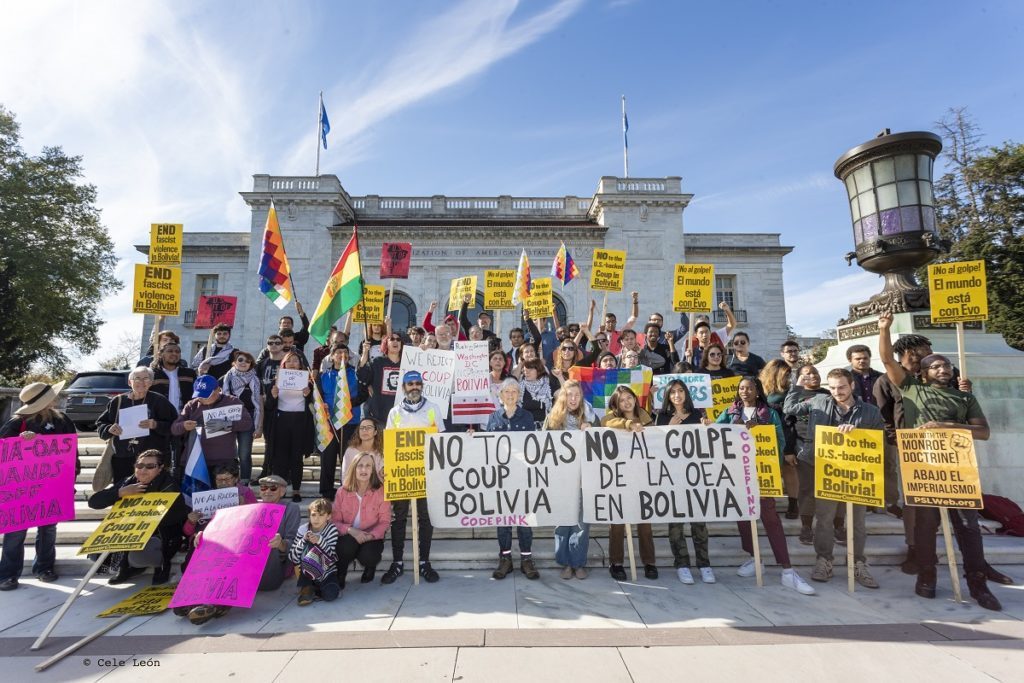
(Photo-Credit: Cele León)
WE DEMAND AN IMMEDIATE END TO THE KILLING OF INDIGENOUS BOLIVIANS!
PEACE FOR BOLIVIA!
SIGNATURES
- Forum of Sao Paulo, Executive Committee in Washington DC, Maryland and Virginia
- CODEPINK, USA
- ANSWER Coalition, USA
- Democratic Socialists of America, Richmond, Virginia chapter
- Socialist Unity Party, USA
- International Committee for Peace, Justice and Dignity, USA
- Friends of the Congo, Washington DC
- National Network on Cuba, USA
- Popular Resistance, Washington DC
- Party for Socialism and Liberation, Washington DC
- Black Alliance for Peace, Washington DC
- Women’s Institute for Freedom of the Press, Washington, DC
- Communist Party, USA
- Central Committee of the Peace and Freedom Party of California, San Diego, California
- Council on Hemispheric Affairs, COHA, Washington DC
- Peace Council, Greater New Haven, Connecticut
- Red Nacional de Salvadoreños en el Exterior, RENASE, USA
- Carolina Peace Resource Center, South Carolina
- Leonard Peltier Defense Committee, San Diego, California
- Congreso de los Pueblos, Colombia, international committee in DC
- FigTree Foundation, USA,
- Comité de Salvadoreños en Washington DC
- Friends of Latin America, Columbia, Maryland
- Rutilio House, Takoma Park, Maryland
- Committee Against Police Brutality, San Diego, California
- Women in Struggle, Washington DC
- Committee in Solidarity with the People of El Salvador, CISPES, Washington DC
- International Womxns Alliance-DC (DIWA)
- Comité del FMLN de Washington DC
- All-African People’s Revolutionary Party (GC), Washington, DC
- World Development Alliance, South Carolina
2019 Activist Salon
Artist and performer Luci Murphy received WIFP’s Women and Media Award at the 2019 Activist Salon on July 17th.
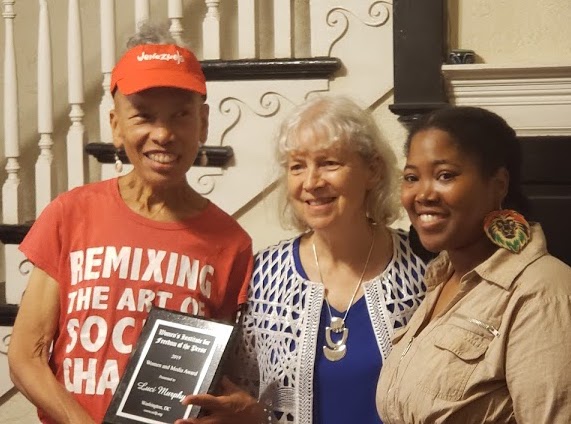
Luci Murphy is a preeminent advocate for utilizing culture to advance social and political justice, weaving people together across communities. As an artist and performer, she has harnessed her musical talents by singing for social justice, civil rights, union rights, affordable housing, peace, and other causes. (See the Women and Media Award page on this website for more about Luci’s important work and contributions.)
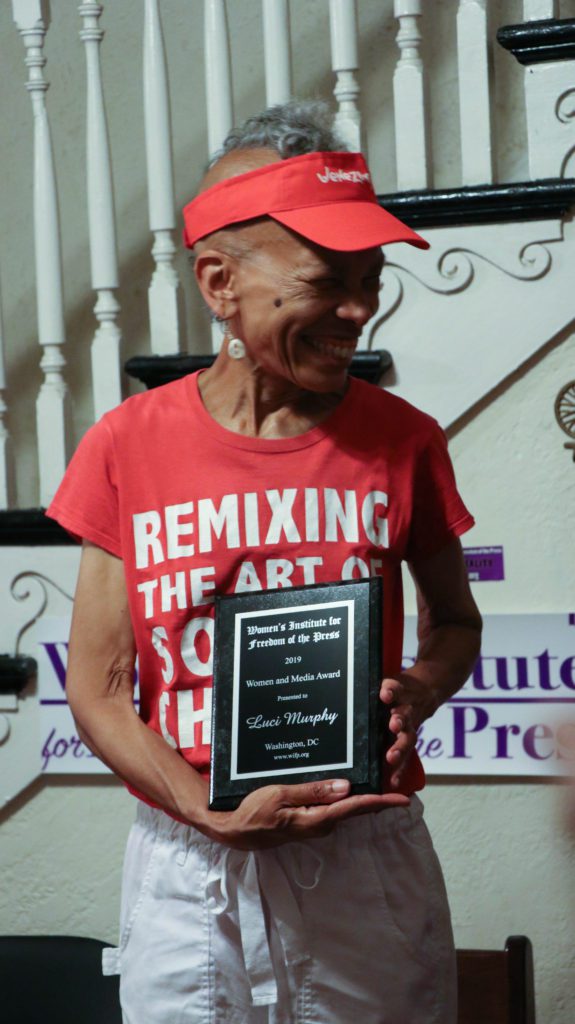
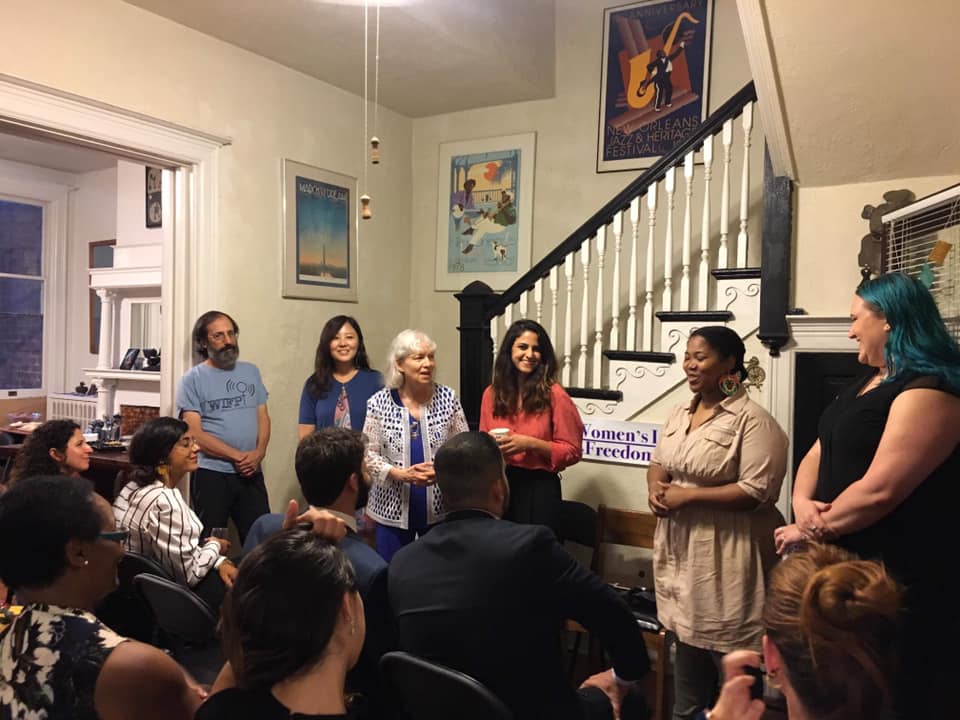
WIFP Director Martha Allen welcomed participants to the 2019 Activist Salon.
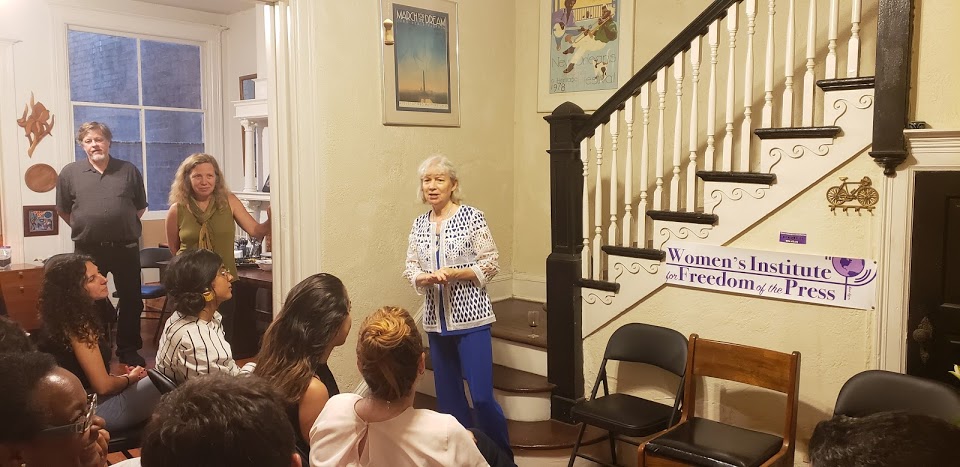
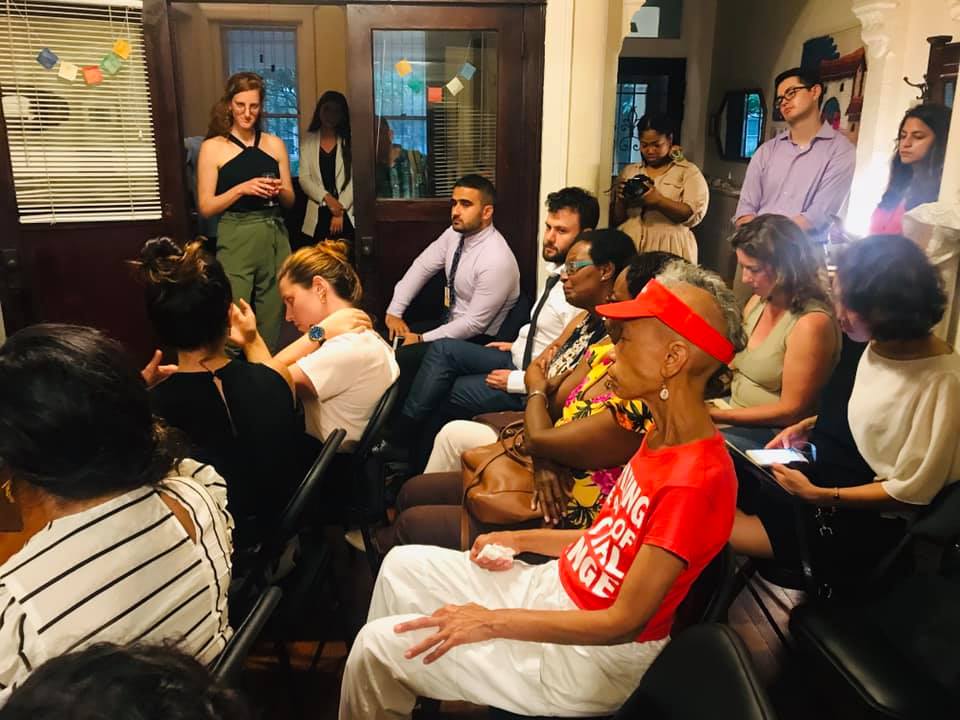
Short interesting presentations by speakers stimulated discussions and led to networking and connecting among the activists.
New Story Leadership for the Middle East (NSL) Managing Directors Rawan Odeh and Anna Garbar interviewed three of their 2019 delegates about their lives and their work.
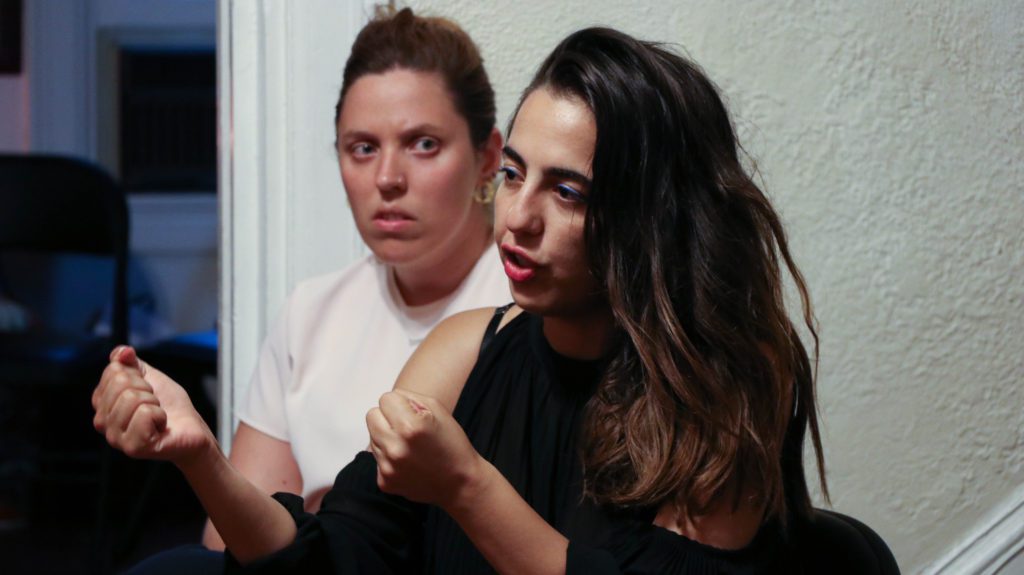
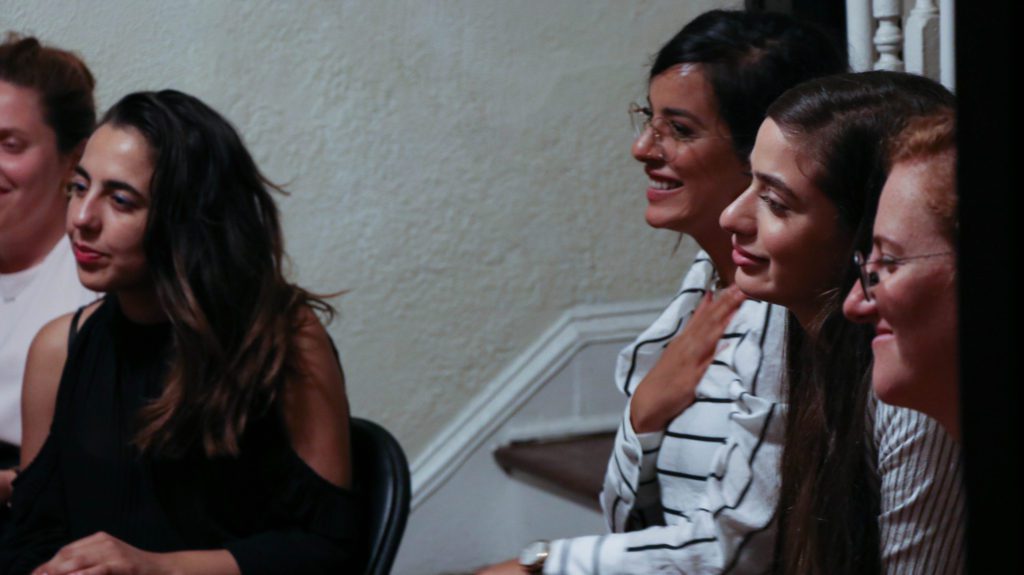
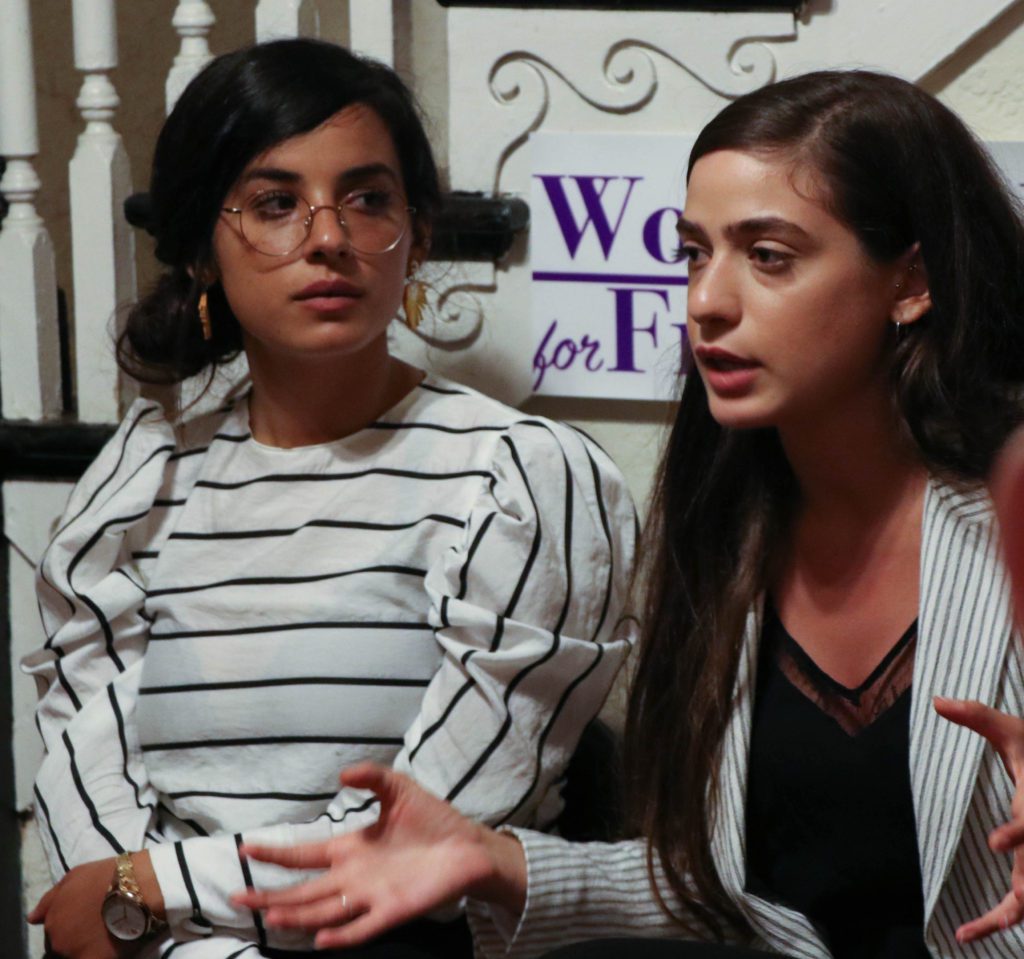
Rawan Odeh is a Palestinian American who lived half her life in New York and half in Nablus. Rawan has worked as an Asset Management Associate for Women’s World Banking in the MENA region. Afterwards, she went on a fellowship with Kings College London and published research on the Economic Aspects of the Palestinian Israeli Conflict.
Anna Garber is an Israeli from Haifa. She holds a B.A. in Political Science and Philosophy at the University of Haifa and is currently pursuing her Masters in International Relations at American University. She has worked at the Institute of International Education.
Rawan and Anna interviewed two Palestinian women and an Israeli leading to discussions with the activist audience. Brief backgrounds of the women who spoke:
Hiba Yazbeck: Palestinian citizen of Israel, born in Nazareth. In communications at Tel Aviv University. Currently interning at Haaretz. Hiba is working in the office with Rep. Rashida Tlaib.
Thawra Abukhdier: Palestinian American from Jerusalem. She holds a Bachelor of Science in Communications and Journalism from Hebrew University. Thawra is working in the office with Rep. Alexandria Ocasio-Cortez.
Dana Amir: Dana is from Gan-New, Israel. The past five years she has been traveling and studying around the world. She is currently pursuing a B.A. degree in Psychology and Economics. Dana is working on a Project for Change where international students learn to recognize and mitigate cognitive and emotional biases that appear in complex and difficult political discussions.
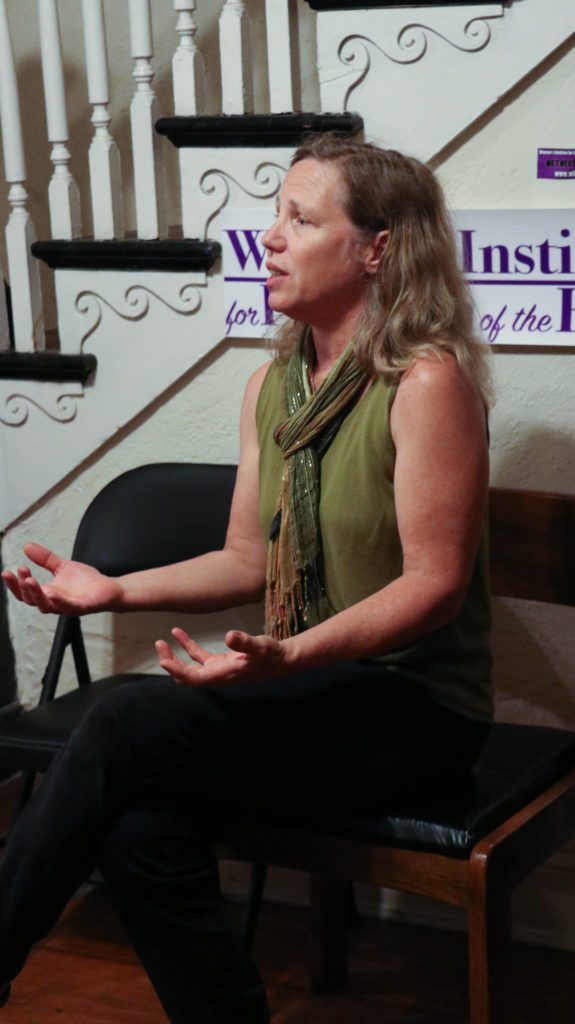
In addition to the speakers on the Middle East, Margaret Flowers spoke about the work of activists in the U.S. on a number of important issues including single payer health care and the importance of activist journalists efforts to get information out that is omitted or distorted by the corporate-owned mass media. Margaret Flowers is a Pediatrician and advocate for single payer health care and justice. She is the co-director of Popular Resistance and co-host of Clearing the Fog, a weekly podcast.
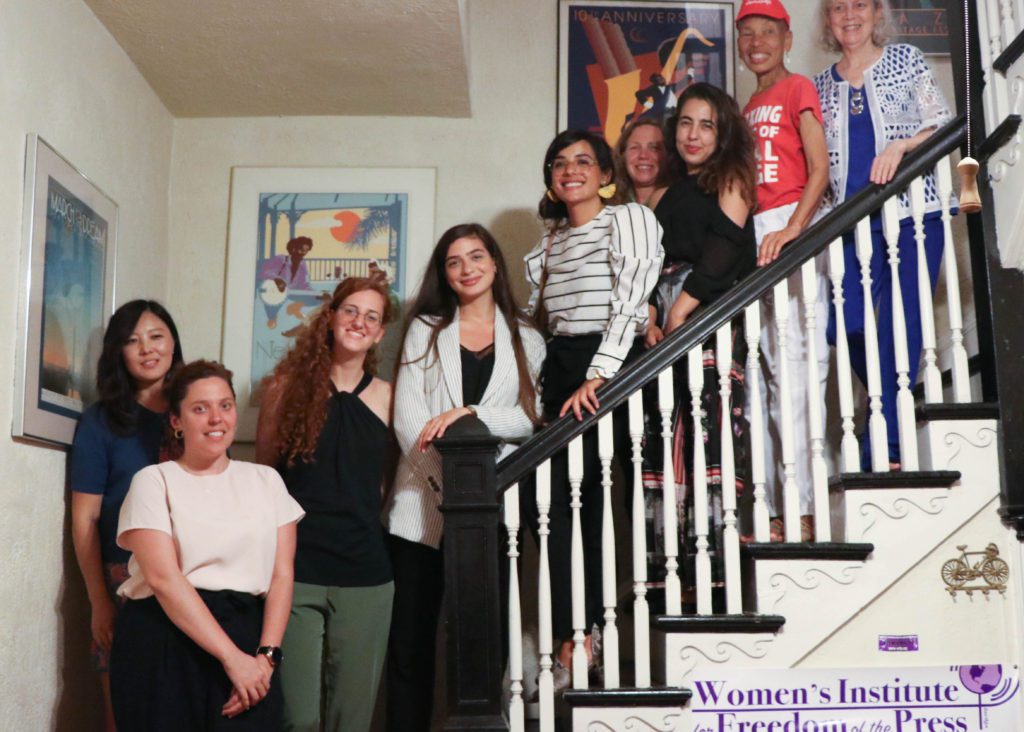
Hosts of the WIFP event were Martha Allen (WIFP director), Tanya Smith-Sreen, Otgon Altankhuyag, Alethea Russell, Arya Boris, and Jonathan Zeitlin — all Associates of WIFP and support staff. Alethea Russell, a photographer, provided most of these wonderful photos from the event.
Organizational links
New Story Leadership for the Middle East (NSL): www.newstoryleadership.org
Popular Resistance: www.popularresistance.org
WIFP Joins Net Neutrality Efforts
June 11, 2019 marked one year since the FCC’s repeal of all net neutrality protections went into effect. In the year since the repeal, there have been extremely troubling incidents of telecom giants slowing popular services like YouTube and Netflix as well as Skype, and Verizon throttling firefighters’ data in the midst of a massive wildfire.
In April, the House of Representatives passed the Save the Internet Act (HR 1644), which would restore the net neutrality protections repealed by the FCC under Chairman Ajit Pai — protections that are crucial to preventing unjust, unreasonable and discriminatory behavior by internet providers. In 2018, the Senate passed a similar measure, known as a Congressional Review Act resolution, with bipartisan support.
Majority Leader Mitch McConnell, however, has declared net neutrality “dead on arrival” in the Senate this year, despite the fact 86% of the public—including overwhelming majorities of Republicans, Independents and Democrats—oppose the FCC’s net neutrality repeal.
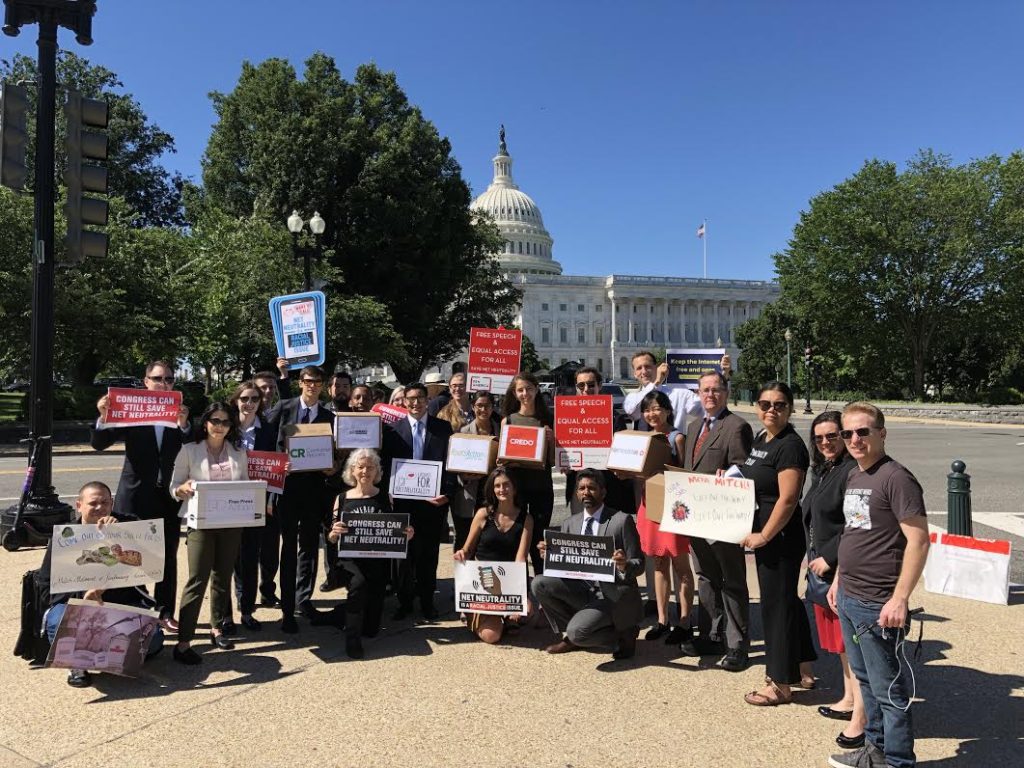
On the morning of Tuesday, June 11th, public interest advocates from Demand Progress, Free Press, Action, Fight for the Future, Consumer Reports, Public Knowledge, Common Cause, National Hispanic Media Coalition, 18MillionRising.org, PEN America and the Women’s Institute for Freedom of the Press hand delivered 3.5 million pro-net neutrality public comments and petition signatures, generated by dozens of netroots groups, to Senator Mitch McConnell in DC. The delivery included petitions from StopTheFCC.net, SaveTheNetFromTrump.com, BattleForTheNet.com, CREDO Action, Consumer Reports, and Free Press Action, as well as public comments submitted to the FCC going back to the lead up to the 2017 repeal.
On the same day, 26 netroots groups launched an online coalition action, demanding Mitch McConnell allow a vote to restore net neutrality.This effort will drive tens of thousands of online actions and phone calls pressuring senators to cosponsor and demand a vote for the Save the Internet Act in the Senate. Over 100 nonprofit and public interest organizations, including WIFP, also sent a letter on June 11th to Sen. McConnell in support of the Save the Internet Act.
These activities coincided with an all-day livestream on the 11th hosted by web companies, video creators, celebrities, gamers, artists, veterans, business owners and policy experts, to draw attention to the Senate’s inaction on this issue, and to pressure Senate leadership to allow a vote to restore net neutrality. The livestream featured the petition delivery.